In this Guide…
In many boardrooms, gut instinct isn’t enough. Cost-cutting projects with simple numbers often win out over customer experience initiatives—even when CX is key to growth.
This guide helps you change the conversation.
You’ll learn how to define, measure, and increase the Return on Investment (ROI) of customer experience, with a clear model and step-by-step guidance.
Here’s what we’ll cover:
- Why ROI matters and how to calculate it for CX programmes.
- Common objections to CX investment—and how to counter them.
- Real examples of how feedback programmes boost retention and revenue.
- The principle of “ROI by Design” and how to apply it to your CX strategy.
- Practical tips for presenting ROI to stakeholders and winning support.
You can’t fatten a pig by weighing it.
Why Customer Experience Matters
Customer experience can feel like an obvious priority. Poor experiences drive churn, lost revenue, and reputational damage. Great experiences, by contrast, fuel growth, referrals, and loyalty.
- 80% of customers will switch after more than one bad experience.
- £75bn are lost annually from poor CX.
- 53% of businesses believe they offer good CX, but only 15% of customers agree.
- Companies with average CSAT grew 8.1%, while those just one point above average grew 17.6%.
But despite the evidence, customer experience initiatives are often questioned. ROI calculations are the way to prove their value in financial terms, shifting debates from “opinion vs opinion” to facts and numbers.
ROI also allows leaders to compete fairly for budget against projects framed around cost-cutting. When CX is shown to directly retain customers, grow revenue, and improve efficiency, it stops being “a nice to have” and becomes a core driver of business success.
Common Objections to CX Investment
Objection 1: “Customer service is a cost.”
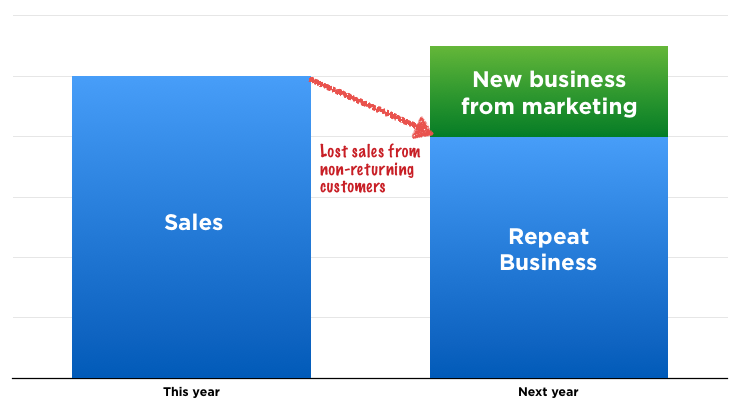
Cost-cutting projects often dominate because their benefits are simple to quantify. But treating CX as just a cost misses its role in:
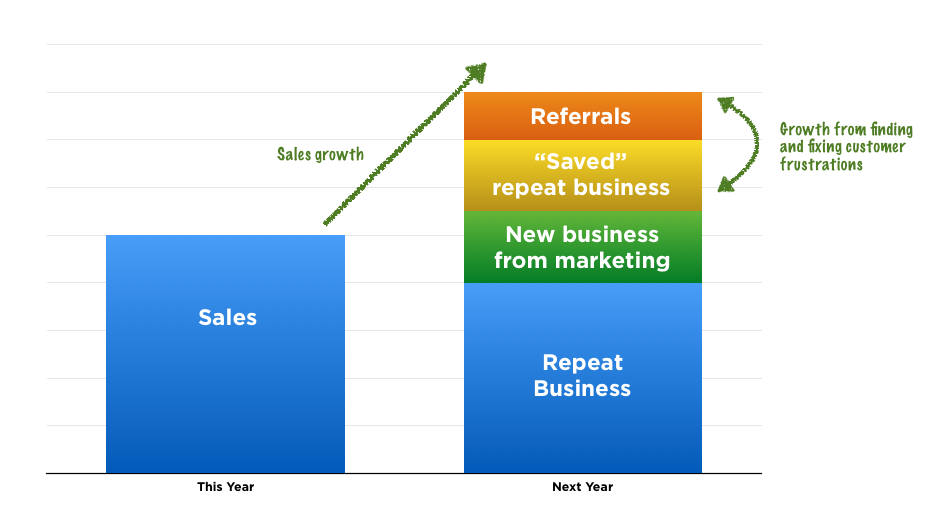
- Winning new sales through recommendations
- Strengthening reputation
- Retaining profitable customers
- Justifying premium pricing
“CX is a cost”
“CX adds value”
Objection 2: “Customers hate satisfaction surveys.”
Customers don’t hate surveys. They hate bad surveys.
What makes surveys bad?
- Wrong timing
- Too many questions
- Too long to complete
- Poorly worded or irrelevant
- No follow-up
- Incessant reminders
- No benefit to the customer
Calculating the ROI of Customer Experience
ROI is how much profit is generated relative to the cost of an investment.
The principle is simple: any investment must return more than it costs, and the more the better.
Lower project cost = Higher ROI
Financial Value of CX
ROI comes from both value added and costs saved.
Value Added:
- New customers referred by word of mouth
- Customers attracted via strong reputation/reviews
- Ability to charge premium prices
- Retention (customers saved)
- Growth in cross-sell and up-sell
Costs Saved:
- Reduced firefighting (fewer complaints)
- Lower compensation/reputation costs
- More efficient processes
- Fewer systems or headcount requirements
Case example:
“One Customer Experience Director avoided significant churn simply by following up swiftly on at-risk customers, adding £1m recurring revenue to the bottom line.” – Guy Letts
ROI by Design – Or No ROI
It’s follow-up processes, not measurement, that deliver ROI.
ROI doesn’t come from measurement alone. A survey in isolation rarely delivers financial return. To succeed, programmes must be designed from the ground up to generate ROI.
Principles of ROI by Design
- Follow-up is critical. Measurement without corrective action delivers no value.
- Design follow-up processes with clear roles, responsibilities, and procedures.
- Ask: If a customer gave negative feedback or suggested a good improvement, what exactly happens next? Who responds? How effectively? How quickly?
How to Increase ROI
- Act fast on negative feedback – turn service recovery into saved revenue.
- Identify systemic improvements – feedback highlights friction points; fixing them improves CX and reduces cost.
- Target premium customers – those willing to pay for better service stay longer and are less price-sensitive. But you must deliver.
- Measure new things – retention numbers, referrals, lost sales analysis, value of saved accounts.
Presenting ROI to Stakeholders
How to Win the Argument
When presenting, remember you’re competing with cost-saving projects that seem simpler. To win:
- Share customer comments directly. Hearing customers in their own words engages even the most sceptical teams.
- Communicate how feedback improves customer sentiment, not just performance metrics.
- Stress that scores are not the goal; outcomes are. Everyone wants a 10, but low scores are often more valuable because they highlight risks and opportunities.
- Set targets for real outcomes: fewer lost customers, faster resolution of issues, more referrals.
- Show how a CX programme and platform help each department succeed. It’s not “another initiative,” it’s a tool to do their jobs better.
Never set targets for satisfaction scores – it always leads to gaming the numbers. Set targets for fewer lost customers, faster resolution, and more referrals.
Conclusion
ROI of customer experience isn’t a mystery. With a clear calculation model, designed follow-up processes, and stakeholder-ready presentation, organisations can prove and increase the financial return of their CX investments.
Leaders who embed purposeful VoC programmes into their operations not only secure budgets but build stronger businesses: more loyal customers, better reputations, and higher growth.
About CustomerSure
CustomerSure helps organisations capture, act on, and evidence the impact of customer feedback.
Our platform is designed to turn insights into improvements that boost ROI.